
The Ditch
Hatred had left a footprint in the neighborhood. A true story.

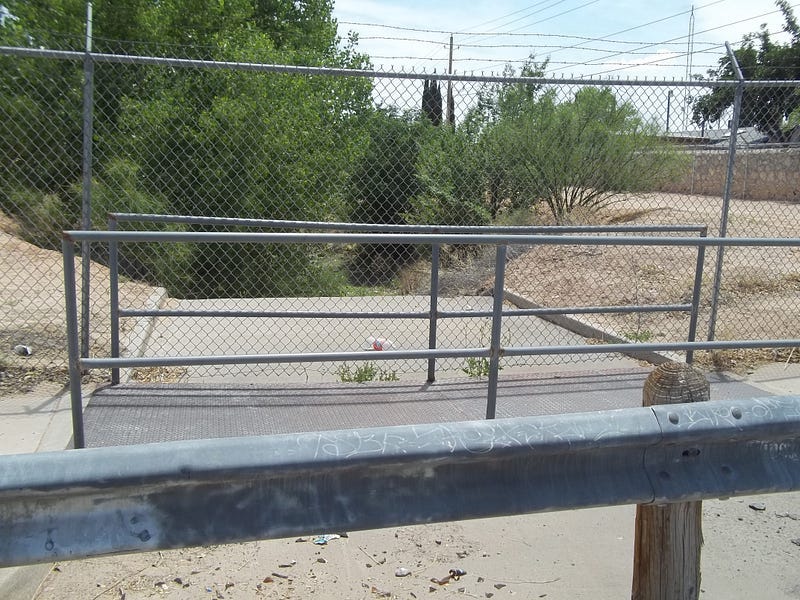
The Ditch
I walk my dog, Ginny, past the ditch every morning. In this desert city, the ditch plays a critical role in stormwater runoff management. Rainwater from the neighborhood flows downhill along the gutters through the streets to the ditch, then through the ditch to a retention pond. Chain link fence topped with barbed wire and chained and padlocked gates keep passersby out of the ditch as they cross the low, steel-plate bridge that spans the drain opening. Most of the time, the ditch is dry.
Passing the ditch is a highlight of the daily walk. It provides an unexpected slice of wild nature, a stunning contrast to the orderly, man-made urban landscape. I admire the lush, leafy cottonwoods, the delicate palo verde with its green trunk and limbs, the thorny mesquite, and the wild daisies that choke the banks.
Long, thick grass and colorful flowering weeds crowd the sidewalk that runs by the ditch along with a wide variety of trash: beer bottles and cans, liquor bottles, water bottles, fast food containers and bags, paper cups, a random sock or flip flop, and wrappers of all kinds. Ginny loves to walk by the ditch and smell the trash. I keep a close eye on her to make sure she doesn’t eat any discarded food.
This day, Ginny and I crossed the bridge over the drain and encountered graffiti scrawled on the sidewalk in white chalk. Its hate-filled message, decorated with swastikas, addressed the members of a historically persecuted religion using a vulgar term for sexual intercourse.
The raw hostility of it stunned and saddened me. Graffiti of any type is unusual in my neighborhood. What exists consists mostly of cryptic gang tags that do not affect anyone but the gang members. This was different; hatred had left a footprint in the neighborhood.
The graffiti could not be a serious attempt to intimidate, I thought. In this primarily Hispanic-Catholic neighborhood, those who saw it would likely be shocked or disgusted, but they would not feel threatened. Some kids must have written it as a sick prank.
I walked on with Ginny by my side, determined not to let some childish stunt ruin the tranquil morning, just as I don’t let trash distract me from the beauty of the ditch.
By the next day, I had forgotten about the incident. Ginny and I embarked on our morning walk. As we approached the ditch, however, the graffiti came to mind, and I wondered what I would find there. Would it be X’d out or otherwise defaced? Would I discover an angry rebuke? Would it have attracted more ugly threats?
When we arrived at the spot where the hateful message had been the previous day, what I saw filled me with joy. The menacing graffiti had been obliterated; there was no trace of it. It was as if it had never existed. In its place, written in the same white chalk, were the words Love Forever.
Those words remained, untouched and triumphant, day after day until a rain shower washed them into the ditch. The words are gone, but the lesson lives on in my heart: love is the answer.
Very nice, KC.
Despite how terrible things seem, on too many occasions,
I frequently am struck by signs that there ARE a lot of decent and even wonderful people most everywhere. Thanks for sharing your story of how someone personally introduced more light and obliterated some darkness. Much appreciated.
One person at a time, one small gesture, initiates change in the world. Thanks for reminding us of this important lesson, cousin.